Informações, reportagens extraídas da internet com conteúdos interessantes, curiosidades, conhecimento. Simples, prático e direto ao ponto. Material para guardar e ler sempre.
For organisations, change is not required just to improve effectiveness. It's often required for an organisation’s survival. In this guide, I'll define What is Change Management and how to create change for your organisation.
Consider that just one app can change an entire business model. That the rate and frequency of change continues to speed up in almost every market around the world. In one study by KPMG, 76 percent of CEOs said that their companies are changing, or have just changed the entire way they operate their business.
Yes, all this change can make an organisation a dynamic and vibrant place to work. But it does present challenges for the people and teams who need leadership and guidance. If you are to realise the benefits of making changes you need to understand what change management is, and how to create it.
In this guide, I'll look at the what change management is. The common approaches used in getting people to change. You'll also discover why people change. As well as the processes and steps you can take to create change while avoiding the common pitfalls and obstacles.
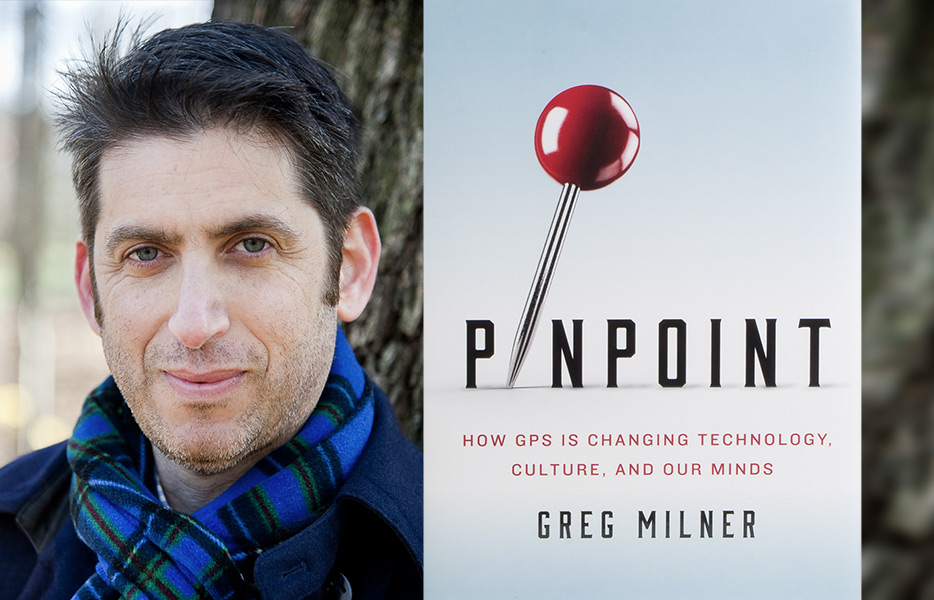
In Pinpoint: How GPS Is Changing Technology, Culture, and Our Minds (W.W. Norton, 2016), Greg Milner takes what might seem to be a mundane subject — the Global Positioning System — and tells an intricate story about the relationship between technology, the economy, and human ability. He also implicitly makes two crucial points about the nature of technological innovation. The first is that public investment in new technologies can create enormous spillover benefits for the economy as a whole. GPS would not exist, after all, had it not been for the Cold War, which spurred the U.S. government to invest heavily in technologies that were then repurposed for civilian use, including the transistor, the microprocessor, and GPS. The second lesson in Pinpoint, our choice for the best book of 2016 on technology, is that the value of powerful new technologies isn’t always apparent at the time they’re introduced. The U.S. Air Force, for instance, kept trying to kill funding for GPS, because it felt that navigation systems were already accurate enough. Milner shows that civilians grasped the real usefulness of GPS long before most of the military did. That’s why long-term, patient investments — whether on the part of the government or in the private sector — are so essential to technological progress.
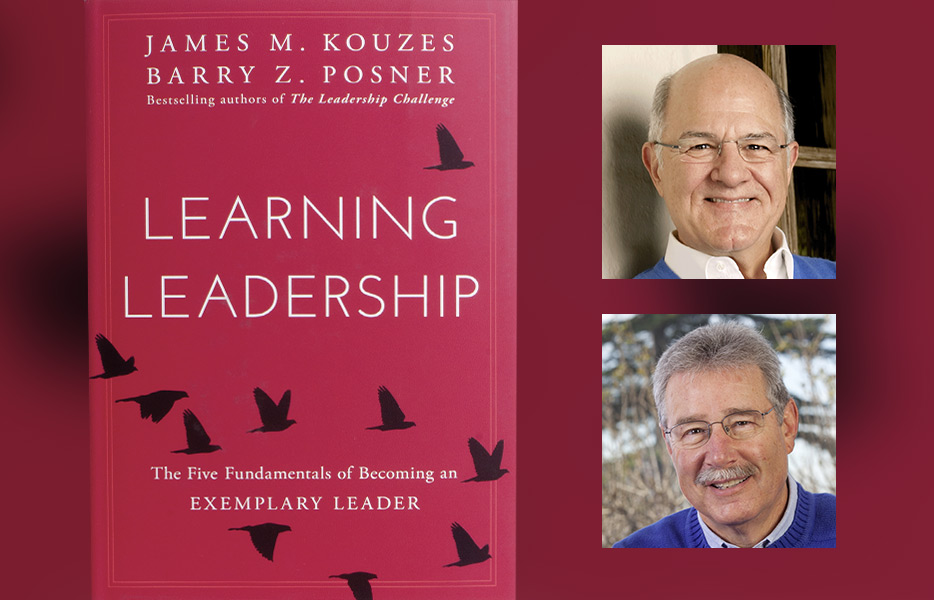
In addressing the perennial question of whether leaders are born or made, James M. Kouzes and Barry Z. Posner, the authors of Learning Leadership: The Five Fundamentals of Becoming an Exemplary Leader (Wiley, 2016), observe that they’ve never met a leader who wasn’t born, which is to say that everyone has the ability to become a better leader. The “born leader” trope, in their view, is antithetical to the way real-life leaders operate. It functions as a fable or folk legend that discourages people at every level from working to become better leaders. Anyone with a desire to improve his or her own leadership skills can benefit from reading this deeply encouraging book, which is our choice for the best book of 2016 on talent and leadership.
The development of Nathan’s Famous Hot dogs “represented a complicated kind of choreographed ballet,” write Lloyd Handwerker and Gil Reavill in Famous Nathan: A Family Saga of Coney Island, the American Dream, and the Search for the Perfect Hot Dog (Flatiron Books, 2016), whose details include the precise amount of water in the meat filling and the skills of a longtime employee who could serve 60 hot dogs a minute. Nathan Handwerker, who was born in Austrian-occupied Galicia, Poland, in 1892 and who emigrated to the U.S. in 1912, “was desperate to succeed,” his grandson writes in our choice for 2016’s best business book on narratives. And succeed he did. During its heyday of the 1950s, the business grossed $3 million annually. The success of Nathan’s Famous was “the direct result of one man’s will to excel, to be ever watchful, to devote himself to the proposition that quality can be gained and maintained only by ceaseless, unflagging effort,” writes his grandson. This simple story is elevated by the insight it offers into Nathan’s archetypal character, as well as by the rich historical context and lovely writing. Perhaps it takes a kind of brilliance to have the big idea, and another kind of brilliance to make it work.
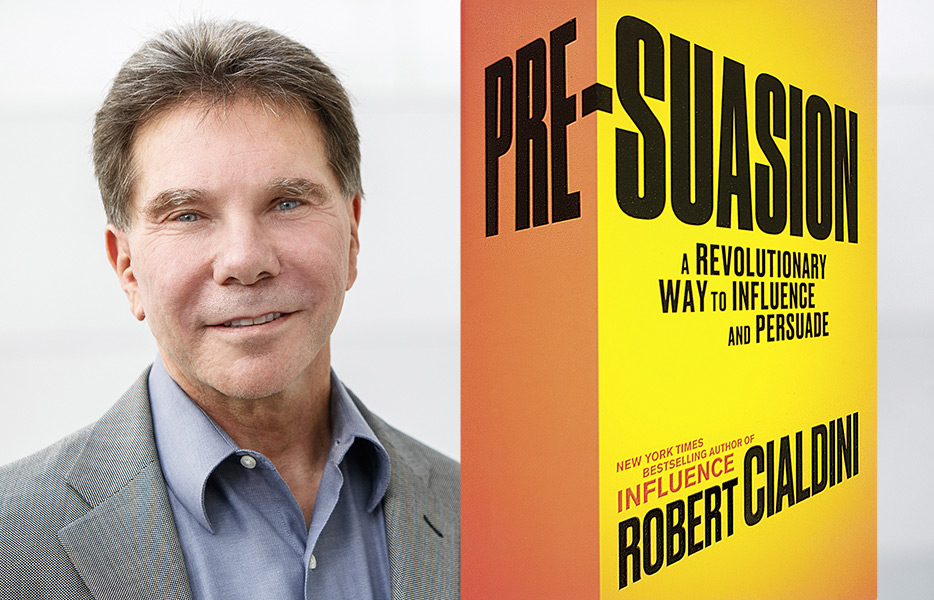
Our choice for best business book of 2016 on management, explores an insight that came to Robert Cialdini, author of Pre-Suasion: A Revolutionary Way to Influence and Persuade (Simon & Schuster, 2016), when he “infiltrated the training programs of a broad range of professions dedicated to getting us to say yes.” He discovered that “the best persuaders become the best through pre-suasion — the process of arranging for recipients to be receptive to a message before they encounter it.” He argues that it is possible to create what he calls privileged moments, “identifiable points in time when an individual is particularly receptive to a communicator’s message.” Cialdini offers many tips and tactics in this handbook on the ways and means of pre-suasion, which managers can and should use to become more effective influencers. But he also devotes considerable effort to persuading us to wield pre-suasion in an ethical manner.
If big data — by its name alone — implies that it holds the answer to everything, Martin Lindstrom dispels that belief when he says frankly, it ain’t all that. “For all the valuable insights big data provides,” he notes in Small Data: The Tiny Clues That Uncover Huge Trends (St. Martin’s Press, 2016), “the Web remains a curated, idealized version of who we really are. Most illuminating to me is combining small data with big data by spending time in homes watching, listening, noticing and teasing out clues to what consumers really want.” Part detective story, part anthropological study, and part travelogue, Small Data, our choice for best business book on marketing in 2016, follows Lindstrom to Russia, China, Brazil, Saudi Arabia, Austria, and other locales as he tries to answer questions including: Why don’t the Chinese use bedspreads? What is the significance of Russians’ love of refrigerator magnets? And just what are teenage girls in Europe doing between 6:00 and 6:30 every morning? In answering each of these questions, Lindstrom is striving to solve a marketing problem. He closes the book by revealing his process, seven steps that can lead marketers all the way from data collection to marketing concept.
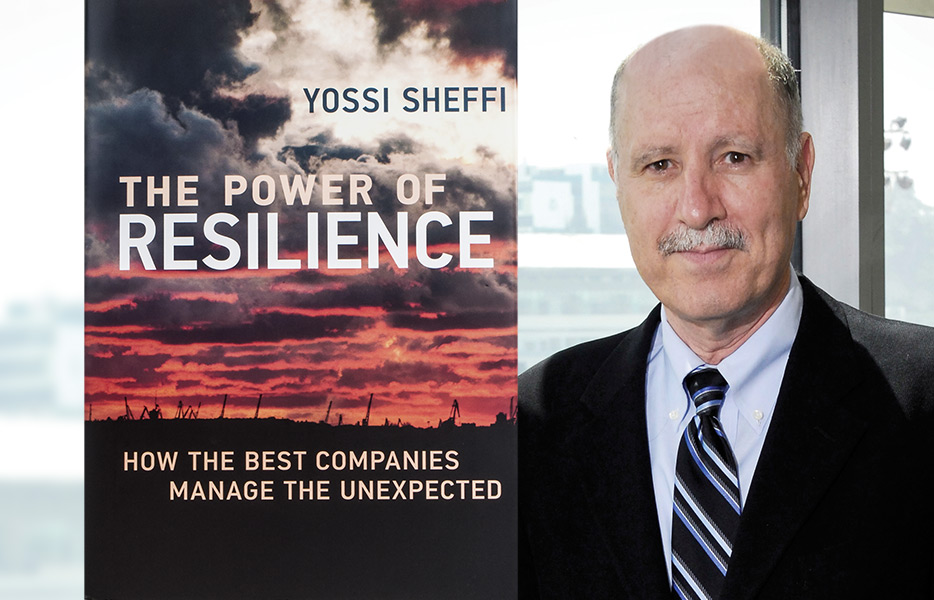
Most corporate managers and business school professors simply accept globalization as an unalloyed good. After all, if your goal is to sell more of something, more potential customers must be better than fewer. But although globalization does hold out the promise of boosting revenues, cutting costs, or both, it also exposes companies to all manner of new risks. Yossi Sheffi’s The Power of Resilience: How the Best Companies Manage the Unexpected (MIT Press, 2015), our choice for the best business book on strategy this year, does an excellent job of covering the most important of those risks as well as best practices in everything from preparation to monitoring to drawing up crisis playbooks. And it does so while focusing on a relatively obscure corporate competence: supply chains. An entire book on supply chains would seem to be a slog and particularly narrow. But The Power of Resilience is actually a bit of a page turner, with implications that go beyond tactics to strategy. Sheffi delivers exactly what his subtitle promises. He makes a compelling argument in support of proactive moves designed to enhance redundancy and flexibility, while swatting away superficial conclusions such as the idea that supply chain resiliency is an expensive option that pays off only in a disaster.
Up until 1980 it was taken for granted in the United States that the public and private sectors were partners in a project of equitable growth. It was never the case that the government needed to take control. And it was never the case that what the U.S. needed was to drown government in the bathtub and let laissez-faire rip. Rather, the government needed to do its proper job of clearing the ground, opening up the space, setting up the playing field and keeping it level, building the institutions, and providing whatever support it could that would greatly add value to private enterprise. While government does the blocking, private enterprise takes the ball and carries it forward at great speed. This is how the U.S. developed from a group of poor, disconnected, agrarian colonies into a powerful, industrialized, integrated nation.
But in American Amnesia: How the War on Government Led Us to Forget What Made America Prosper (Simon & Schuster, 2016), our choice for best business book of the year on the economy, Jacob S. Hacker and Paul Pierson argue that the U.S. fell prey to a fit of amnesia. Our political system forgot how things worked — and how they are supposed to work. Hacker and Pierson tell a compelling story of the descent of first American conservatism and then the Republican Party from pragmatic engagement to ideological echo chamber.
Since the mid-2000s, organizational change
management and transformation have become permanent features of the business
landscape. Vast new markets and labor pools have opened up, innovative technologies
have put once-powerful business models on the chopping block, and capital flows
and investor demand have become less predictable. To meet these challenges,
firms have become more sophisticated in the best practices for organizational
change management. They are far more sensitive to and more keenly aware of the
role that culture plays. They’ve also had to get much better on their
follow-through.
Yet according to a 2013
Strategy&/Katzenbach Center survey of global senior
executives on culture and change management, the success rate of major change
initiatives is only 54 percent. This is far too low. The costs are high when
change efforts go wrong—not only financially but in confusion, lost
opportunity, wasted resources, and diminished morale. When employees who have
endured real upheaval and put in significant extra hours for an initiative that
was announced with great fanfare see it simply fizzle out, cynicism sets in.
How to Lead
Change Management
DeAnne
Aguirre, senior partner with Strategy&, discusses techniques that can help
companies transform quickly and effectively.
Our experience with organizational change
management suggests that there are three major hurdles to overcome. The
first—no surprise—is “change fatigue,” the exhaustion that sets in when people
feel pressured to make too many transitions at once. A full 65 percent of
respondents to the Katzenbach Center survey reported this as a problem. The
change initiatives they suffered through may have been poorly thought through,
rolled out too fast, or put in place without sufficient preparation. Fatigue is
a familiar problem in organizational change management, especially when splashy
“whole new day” initiatives are driven from the top.
Change initiatives also flounder, according to 48
percent of the respondents, because companies lack the skills to ensure that
change can be sustained over time. Leaders might set out eagerly to raise
product quality, but when production schedules slow and the pipeline starts
looking sparse, they lose heart. Lacking an effective way to deal with
production line problems, they decide their targets were unrealistic, they
blame the production technology, or they accuse their frontline people of not
being up to the task. A much better way to solve the problem is to invest
in operational improvements, such as process design and training, to instill
new practical approaches and give people the knowledge and cultural support
they need.
The third major obstacle is that transformation
efforts are typically decided upon, planned, and implemented in the C-suite,
with little input from those at lower levels. This filters out information that
could be helpful in designing the initiative while also limiting opportunities
to get frontline ownership of the change. In the Katzenbach Center survey, 44
percent of participants reported not understanding the changes they were
expected to make, and 38 percent said they didn’t agree with the changes.
The following list of 10 guiding principles for
change can help executives navigate the treacherous shoals of transformation in
a systematic way.
1. Lead with the culture. Lou
Gerstner, who as chief executive of IBM led one of the most successful business
transformations in history, said the most important lesson he learned from the
experience was that “culture is everything.” Businesspeople today understand
this. In the Katzenbach Center survey, 84 percent said that the organization’s culture was critical
to the success of change management, and 64 percent saw it as
more critical than strategy or operating model. Yet change leaders often fail
to address culture—in terms of either overcoming cultural resistance or making
the most of cultural support. Among respondents whose companies were unable to
sustain change over time, a startling 76 percent reported that executives
failed to take account of the existing culture when designing the
transformation effort.
Skilled change managers make the most of their
company’s existing culture.
Why would this be true, given the widespread
recognition of culture’s importance? Perhaps it’s because change management
designers view their company’s culture as the legacy of a past from which they
want to move on. Or they get so focused on structural details—reporting lines,
decision rights, and formal processes—that they forget that human beings with
strong emotional connections to the culture will be enacting these changes. Or
they assume that culture, because it is “soft” and informal, will be malleable
enough to adapt without requiring explicit attention.
Yet skilled change managers, conscious of
organizational change management best practices, always make the most of their
company’s existing culture. Instead of trying to change the culture itself,
they draw emotional energy from it. They tap into the way people already think,
behave, work, and feel to provide a boost to the change initiative. To use this
emotional energy, leaders must look for the elements of the culture that are
aligned to the change, bring them to the foreground, and attract the attention
of the people who will be affected by the change.
In two healthcare companies undergoing a merger,
culture led the post-deal integration. Using a culture-related diagnostic
questionnaire, the change management team asked people to describe each
company’s operating style—and mapped the responses from the two legacy
companies to get a sense of their combined strengths and challenges. It quickly
became clear that where one company had a culture attuned to bottom-line
results, the other tended to focus on process. Optimally, the new company would
need to skillfully use processes to deliver clear results. By first taking the
time to recognize and acknowledge each company’s underlying culture, leaders of
the merged firm harnessed deeply ingrained strengths to energize the change and
avoided the incoherence that could have resulted from a less intentional and
sensitive redesign.
2. Start at the top. Although
it’s important to engage employees at every level early on, all successful
change management initiatives start at the top, with a committed and
well-aligned group of executives strongly supported by the CEO. This alignment
can’t be taken for granted. Rather, work must be done in advance to ensure that
everyone agrees about the case for the change and the particulars for
implementing it.
A clinical research firm was committed to tripling
its size over the next decade to achieve a more competitive position. Because
the company was still pretty much operating as a startup after 25 years, this
required a far-reaching organizational redesign. Before starting the design
phase, finance leaders gathered at an off-site meeting to begin a rigorous
exercise in alignment. The exercise included a leadership team effectiveness
survey, which revealed that though these leaders called themselves a team, they
didn’t really see themselves that way. Instead, they mostly operated as lone
rangers, in characteristic startup style.
Each of the executives in the group made a
thoughtful individual presentation about the case for change. Most of them
agreed on the general direction the company needed to take to achieve rapid
growth. But their descriptions of how to move in that direction—for example,
what the first concrete steps should be—were all over the map. They were then
tasked to work together to develop a case for change that every one of them
could support.
To hammer out these
agreements, these top executives had to listen closely to their colleagues and
weigh conflicting points of view. The exercise was demanding, but they began to
coalesce around a coherent vision for what the company should look like in 10
years. Most importantly, the experience of working together so intensely led
the executives, for once, to act as a collaborative and committed team. By the
end of the off-site meeting, they found that they were all using the same
language to describe what the company needed to do. As one participant noted,
the experience had transformed him, which in turn
gave him confidence that together they could cascade the plan to other groups
at other levels of the hierarchy.
3. Involve every layer. Strategic
planners often fail to take into account the extent to which midlevel and
frontline people can make or break a change initiative. The path of rolling out
change is immeasurably smoother if these people are tapped early for input on
issues that will affect their jobs. Frontline people tend to be rich
repositories of knowledge about where potential glitches may occur, what
technical and logistical issues need to be addressed, and how customers may
react to changes. In addition, their full-hearted engagement can smooth the way
for complex change initiatives, whereas their resistance will make implementation
an ongoing challenge.
Planners who resist early engagement at multiple
levels of the hierarchy often do so because they believe that the process will
be more efficient if fewer people are involved in planning. But although it may
take longer in the beginning, ensuring broad involvement saves untold headaches
later on. Not only does more information surface, but people are more invested
when they’ve had a hand in developing a plan. One common aphorism in change
management is “you have to go slow to go fast.”
IBM recognized the need for such an approach in
2003, when rolling out a new initiative on culture. The leadership team had met
intensively to develop clear definitions of the cultural traits the
organization would require going forward. They then declared a “values jam,” a
website set up for a 72-hour period, where anyone in the company could post
comments, responses, suggestions, and concerns. Leaders then made key changes
based on the feedback they received and communicated clearly how the input they’d
received was being incorporated.
4. Make the rational and
emotional case together. Leaders will often make the case for major
change on the sole basis of strategic business objectives such as “we will
enter new markets” or “we will grow 20 percent a year for the next three
years.” Such objectives are fine as far as they go, but they rarely reach
people emotionally in a way that ensures genuine commitment to the cause. Human
beings respond to calls to action that engage their hearts as well as their
minds, making them feel as if they’re part of something consequential.
Hewlett-Packard CEO Meg
Whitman and her senior executive team appear to be following this principle in
their transformation efforts. They have sought to activate a strong personal
connection between HP and its employees, by drawing directly on the company’s
cultural history and traditions. For example, through symbolic gestures such as
tearing down the fences that surrounded the executive parking lot and moving
top executives into cubicles, the company has reinforced the original “HP Way”
ethic in which the intrinsic quality of the work is as important as one’s
position in the hierarchy. (Whitman tells this story in an April 2013 LinkedIn
blog post, “The
Power of Transparent Communication.”) This strategy contrasts
with that of Whitman’s immediate predecessors, who had declared it was time for
the company to abandon its core identity. In any organization facing a
challenging environment, the emotional connection fostered by moves like these
is likely to make a major difference.
5. Act your way into new
thinking. Many
change initiatives seem to assume that people will begin to shift their
behaviors once formal elements like directives and incentives have been put in
place. People who work together on cross-functional teams will start
collaborating because the lines on the chart show they are supposed to do so.
Managers will become clear communicators because they have a mandate to deliver
a message about the new strategy.
Yet lines on a chart and bold statements of intent
have only so much impact. Far more critical to the success of any change
initiative is ensuring that people’s daily behaviors reflect the imperative of
change. Start by defining a critical few behaviors that will be essential to
the success of the initiative. Then conduct everyday business with those
behaviors front and center. Senior leaders must visibly model these new
behaviors themselves, right from the start, because employees will believe real
change is occurring only when they see it happening at the top of the company.
Leaders of a major global manufacturer seeking to
escape bankruptcy believed the company had lost touch with customers because of
entrenched problems in its culture. Managers operated in an overly layered
system without much accountability. They were ponderous, risk averse, insular,
and prone to spending time on approvals and office politics. Instead of
implementing a dramatic, full-scale turnaround, the change team demanded that
leaders adopt three specific behaviors:
·Make major, visible decisions in days instead of
weeks or months.
·Spend time with people at the frontline leadership
(supervisory) level, asking for their input and engaging them in frank
discussions.
·Ensure the middle and lower ranks have direct
contact with real-life customers.
Because these behavioral shifts were both limited
and clearly spelled out, they were implemented quickly. Leaders were asked to
act “as if” the organization did things this way, rather than trying to think
their way out of old ways of being. These behaviors accelerated the company’s
passage out of bankruptcy, which occurred ahead of schedule.
6. Engage, engage, engage. Leaders
often make the mistake of imagining that if they convey a strong message of
change at the start of an initiative, people will understand what to do.
Nothing could be further from the truth. Powerful and sustained change requires
constant communication, not only throughout the rollout but after the major
elements of the plan are in place. The more kinds of communication employed,
the more effective they are, which is why HP’s tearing down that fence was so
important: Symbols reinforce the impact of words.
A global publisher undertook a major initiative to
become more digital, putting in place far-reaching structural changes. The top
leaders decided to engage people throughout the company at a variety of levels.
First, they convened a series of town halls where large groups were given the
news and invited to ask how the company-wide shift would affect them.
Executives followed this with function-wide meetings where people could learn,
for example, about the prospective impact on finance or human resources. The
company also offered a version of fireside conversations they called “PIE
chats” (PIE stood for performance, innovation, and execution). Finally, an
internal trade fair was planned to showcase what various teams were doing to
make the company more digital. This multifaceted and ongoing communications
effort kept the message alive, giving every employee an understanding of the
change and a stake in the outcome.
7. Lead outside the lines. Change
has the best chance of cascading through an organization when everyone with
authority and influence is involved. In addition to those who hold formal
positions of power—the company’s recognized leaders—this group includes people
whose power is more informal and is related to their expertise, to the breadth
of their network, or to personal qualities that engender trust.
We call these informal leaders “special forces.”
They can be found throughout any organization. They might include a
well-respected field supervisor, an innovative project manager, or a
receptionist who’s been at the firm for 25 years. Companies that succeed at
implementing major change identify these people early and find ways to involve
them as participants and guides. There are three distinct kinds of informal
leaders:
• Pride builders are great
at motivating others and inspiring them to take pride in their work. People
influenced by them feel good about working for the organization and have a
desire to go above and beyond.
• Trusted nodes are go-to
people. They are repositories of the organization’s culture. They are the ones
approached by people who want to know what’s really happening in the
organization—for example, when they’re trying to figure out if those leading a
change initiative are actually going to follow through.
• Change or culture
ambassadors know, as if by instinct, how to live the change
the organization is making. They serve as both exemplars and communicators,
spreading the word about why change is important.
Informal leaders must be identified before they can
be engaged. The best way to do this in a large organization is to run a network
analysis. By mapping out connections and seeing who people talk to, you can
complement the formal org chart with one that enables you to lead outside the
lines.
8. Leverage formal
solutions. Persuading
people to change their behavior won’t suffice for transformation unless formal
elements—such as structure, reward systems, ways of operating, training, and
development—are redesigned to support them. Many companies fall short in this
area.
A law firm tried to professionalize its clubby
culture, which clients perceived as inwardly focused. The lead partner group
recognized that associates needed more formal mentoring and development. The
existing system, in which partners who headed the practice groups conducted all
the training, had led to uneven results. So the transformation team created a
development committee and put out a call for experienced staff members willing
to work with new hires. The team was delighted when a strong group of
contributors volunteered and put in the time required to design a robust
development program and start engaging associates.
After a strong start, however, the effort faltered;
people who had been enthusiastic fell away. Debriefing those involved,
leadership identified the problem: No formal mechanisms were in place to
support or reward this participation. Calculations for bonuses left development
work out of the equation, and although senior partners paid lip service to the
“wonderful work” the development committee was doing, they seemed to regard its
members as internal volunteers. Once they recognized this problem, the firm’s
leaders enacted substantial policy changes, starting with a mechanism the
compensation committee could use to take into account the contributions made by
those who trained others.
9. Leverage informal
solutions. Even when
the formal elements needed for change are present, the established culture can
undermine them if people revert to long-held but unconscious ways of behaving.
This is why formal and informal solutions must work together.
A top-tier technology company was trying to
inculcate a more customer-centric mind-set after a decade focused on
relentlessly cutting costs. Survey diagnostics revealed significant customer
dissatisfaction with the quality of the company’s products, which were too
often released into the marketplace with significant flaws. A set of new
procedures was put in place along with metrics to identify gaps in product
development, process quality controls, and cross-teaming at the front lines.
But one of the most powerful solutions was purely
cultural and informal—changing the informal motto that governed frontline
decision making. The slogan of the cost-cutting era, “Ship by any means,” was
replaced by a new aphorism: “If it’s not right, don’t ship it.” Pride builders
were enlisted to instill the message that everyone needed to prevent flawed
products from going out, even if that meant pulling products apart to check
them or slowing down production. By asking people at every level to be
responsible for quality—and by celebrating and rewarding improvements—change
leaders were able to create an ethic of ownership in the product and vanquish
the old ethic: “We just do what we’re told.”
10. Assess and adapt. The
Strategy&/Katzenbach Center survey revealed that many organizations
involved in transformation efforts fail to measure their success before moving
on. Leaders are so eager to claim victory that they don’t take the time to find
out what’s working and what’s not, and to adjust their next steps accordingly.
This failure to follow through results in inconsistency and deprives the
organization of needed information about how to support the process of change
throughout its life cycle.
A global consumer products company had made a
far-ranging commitment to lowering costs. Leaders designed a robust change
template and implemented it widely; the metrics indicated that they were
succeeding. But the company wanted to be sure that people understood the
ongoing nature of this commitment. So they rolled out a series of pulse surveys
and convened focus groups to describe the case for change and the new behaviors
required of everyone.
The first round of surveys found that only 60
percent of respondents understood the message. The company then called on
informal leaders to play a bigger role in evangelizing for the initiative. They
continued to run these surveys and focus groups to measure the result until a
more sizable majority of the staff had shown they were prepared.
These 10 guiding principles offer a powerful
template for leaders committed to effecting sustained transformational change.
The work required can be arduous and exacting. But the need for major change
initiatives is only going to become more urgent. It behooves us all to get it
right.
Author Profiles:
·DeAnne Aguirre is a
senior partner with Strategy& based in San Francisco. She is the co-leader
of the firm’s global Katzenbach Center and an expert in culture, leadership,
talent effectiveness, and organizational change management. She advises senior executives globally on
organizational topics.
·Micah Alpern is a
senior associate with Strategy& based in Chicago and a member of the
Katzenbach Center’s operating team. He is an expert in culture transformation
and organizational change management.
·This article is a revision and update of “10 Principles of Change Management,” by John
Jones, DeAnne Aguirre, and Matthew Calderone, s+b, Summer 2004.
·Also contributing to this article was s+b contributing editor Sally Helgesen.